

In 2012, I got into the Start-Up Chile program and moved from Vancouver, Canada, to Santiago, Chile.
Suddenly, I was sharing a coworking space at Movistar Innova with entrepreneurs from 35 different countries. Different backgrounds, different businesses, different ideas about what was possible.
That experience changed how I thought about entrepreneurship. It also changed how I thought about myself because I realized that, with the rich support network around me, I could make even my craziest ideas a reality.
I’m Kyle Pearce, founder of ADHD Flow State and several other startups. Looking back, that time in Chile helped me see that building a business was also an opportunity to design a life that worked with my brain.
Among the founders I met, I kept recognizing patterns that felt familiar: curiosity, intense bursts of enthusiasm, a love of starting things, and difficulty staying interested once the work became repetitive.
ADHD came up often enough that I started thinking about the connection. I wasn’t just counting diagnoses, I was recognizing something of myself in the people around me.
Many of us wanted freedom, variety, and meaningful challenges. Yet the version of entrepreneurship we were pursuing could easily give us the opposite.
You start a company because you want more control over your life. Then your calendar fills with meetings, your team needs constant attention, and you find yourself going to the same office every day.
You’ve created your own job. Somehow, your new boss is even more demanding.
Watching that tension unfold made me question what kind of founder I wanted to become.
Did I actually want to build a billion-dollar company? Did I want the responsibility, the fundraising, and the demands of managing an increasingly large team?
Or did I want a profitable business that let me do work I enjoyed, spend time in nature, travel, and surround myself with interesting people?
For me, the second option became much more compelling.
I wanted to align passion, purpose, and profit. And I wanted the way I lived to support that alignment.
Vancouver played a big part in that realization.
It’s my hometown, and there’s a lot I love about it. The mountains, the forests, the ocean. On a beautiful summer day, it’s hard to imagine being anywhere better.
But I found the long stretches of grey weather difficult. For roughly six months of the year, the climate felt taxing on my energy and mental health.
I felt like I was fully enjoying perhaps three or four months, when the sunshine and weather were more consistent. That’s a lot of the year to spend waiting for the part you love.
Once I started living in warmer, sunnier places, I noticed how differently I felt.
My mood improved. I had more energy. Getting outside was easier, and I often found it easier to focus.
Climate wasn’t the only factor, but it mattered far more than I had understood. The environment I lived in was shaping how I felt and how I worked.
That raised a question I couldn’t really put away: if I could run my business online, why wouldn’t I spend more time in places where I felt better?
Over the years, that question has taken me across Latin America, including Mexico, Costa Rica, Colombia, Brazil, and Peru.
I’ve also spent time living in Thailand, Nepal, and Bali, as well as Portugal, Bulgaria, Greece, and Turkey.
Along the way, I’ve looked for conscious communities and startup hubs. Places where I could meet innovative, creative people while having access to nature and a lifestyle I enjoyed.
For my ADHD brain, that combination has been powerful.
I love learning through experience. A new culture gives me something to be curious about. A mountain trail gets me out of my head. A conversation with someone building something unusual can send me back to my own work with fresh energy.
But I’ve also learned that there’s a limit to how much novelty helps.
Constant movement can become exhausting. Every new place means finding somewhere to work, figuring out daily logistics, and starting your social life again.
That’s why slow travel has worked best for me.
I usually spend at least three months in a location. That gives me time to settle in, establish routines, make friends, and get meaningful work done.
I want enough change to feel inspired and enough familiarity to feel grounded.
Community is a big part of making that possible.
Through Social Creators, I run retreats and invite friends from around the world to come spend time together. Sometimes they stay afterward. I rent villas and organize creator houses where we can share a home, work on our businesses, and enjoy life together.
Those experiences make travel feel much more connected.
You can build friendships around shared projects, meals, adventures, and conversations that continue beyond a single evening. You can return to places where people know you. You can travel with friends instead of continually starting from scratch.
Without that, digital nomad life can get lonely. Making friends in every new destination takes energy, even when you enjoy meeting people.
My travels also helped shape Sacred Treks, my travel and retreat company.
Through Sacred Treks, I want to create opportunities for Indigenous communities to share their knowledge and teach visitors on their own terms. There is so much to learn from living traditions that hold a deeper relationship with land, community, and reciprocity.
Many of us in modern society have become disconnected from those relationships. We can see the consequences in how we live, consume, and treat the environment.
I’m interested in how learning from older ways and ancient wisdom can help us build a more regenerative culture. That means approaching communities with respect, supporting their leadership, and making sure they benefit from the experiences they help create.
Travel has given that work a place in my life. Something I love has become part of something I want to contribute.
That’s the alignment I keep coming back to.
Working remotely is much harder when you dislike the work. A beautiful location doesn’t automatically make an unfulfilling business meaningful, especially when there are so many interesting things competing for your attention.
For me, the foundation is work I care about, a business model I can sustain, and a lifestyle that helps me feel well.
Living in places with lower costs can help, too.
When you don’t need to cover Vancouver, San Francisco, or New York living expenses, you may have more room to choose your workload. Lower expenses can mean less pressure to grow endlessly and more freedom to protect your time.
Digital nomadism doesn’t have to mean traveling all year. You might spend half the year at a home base and the other half somewhere sunnier. You might return to the same two or three places and build lasting friendships in each.
The point is to find a rhythm that works for you.
For me, becoming a digital nomad has meant giving myself permission to take my environment seriously: the climate, the nature, the people, the cost of living, and the way my days feel.
It has helped me build a life with room for curiosity, meaningful work, community, and adventure.
I became a digital nomad because I wanted to enjoy more of my life while I was building my business.
And I wanted to stop waiting for summer to feel like myself.
Want to build your own version of this lifestyle? Start with a business that fits your strengths, supports your income needs, and gives you enough structure to follow through.
In How to Build a Business You Can Run From Anywhere With ADHD, I share practical ways to simplify your offers, protect your focus, and create systems that support you wherever you choose to live.
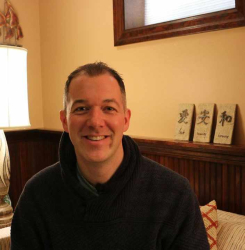
For the past decade, I've been coaching ADHD entrepreneurs to build businesses that work with their brains and create more freedom in their lives.
I also run an AI search marketing agency for leading health and travel brands. My latest venture, Sacred Treks, offers sacred mountain pilgrimages in some of the world's best ecotourism destinations.
- Why I Became a Digital Nomad As A Founder With ADHD - September 16, 2026
- How to Build a Business You Can Run From Anywhere With ADHD - September 15, 2026
- Flow State Psychology: 16 Flow Triggers For Better ADHD Focus - September 15, 2026