


My pick for most ADHD brains in 2026 is Muse S Athena if you want to train focus, and Pulsetto if stress is what kills your focus and the new Neurable One smart headphones if you want to improve your focus at work.
I have ADHD and I run a few online businesses. My brain works in sprints, then has a tendency toward crash, then goes looking for a new tab. So I test a lot of gear that promises better focus, energy and mood.
Of everything that I’ve tried, home neurofeedback devices have done more for me than almost anything else I have tried. Plenty of other gadgets ended up in a drawer but depending on the person, there’s a lot of innovative new wearables, gadgets and tech tools that can help people with ADHD.
This guide covers 15 tools you can buy right now. Each review covers what the device does, how it might help ADHD focus, the pros and cons, and the real cost once you add subscriptions, gels and pads.
Why I Created This Guide
Having ADHD and not being able to focus is hard enough. Add low energy and bad sleep from stress, and some weeks it feels like running a business with the handbrake on.
That’s why I keep testing this stuff. I wanted one place that shows what’s on the market right now, what each tool really costs once you add subscriptions, and who it suits.
The upside is that you don’t have to guess. Most of these devices come with a trial or return window, often around 30 days, and I’ve noted the return terms where brands publish them. Buy one, use it every day for a few weeks, and if it doesn’t work for you, send it back.
Disclaimer: this guide is not medical advice. Apart from EndeavorOTC, which is FDA-authorized for adult ADHD, none of these tools are medical devices. They are sold as general wellness products. None replaces medication or therapy, and they work best on top of the basics: sleep, movement, protein, sunlight and whatever plan you have with your doctor.
Affiliate disclosure: some links in this guide are affiliate links. If you buy through one, I may earn a commission at no extra cost to you. It doesn’t change what I recommend, and every review lists the downsides as well as the upsides.
The 15 ADHD tech tools at a glance
| Tool | Type | Device price (USD) | Ongoing cost | Best for |
|---|---|---|---|---|
| 1. Neurable One | EEG headphones | $499 | None announced | Spotting focus drift and fatigue while you work |
| 2. Muse S Athena | EEG + fNIRS headband | $474.99 | Optional Premium (bundle with 1 year: $539) | Neurofeedback plus brain-tracked sleep |
| 3. Mendi | fNIRS headband | $299 | None | Short daily focus training |
| 4. Pulsetto | Neck vagus nerve stimulator | $269 (Lite) / $296 (FIT) | Optional Premium $139/yr, plus gel | Calming a wired, anxious brain |
| 5. Nurosym | Ear-clip vagus nerve stimulator | About $825 to $900 | None | People who want the deepest research base |
| 6. Apollo Neuro | Vibration wearable | $349 (or $448 with 1 year of app) | SmartVibes $99/yr | Shifting state without stopping work. |
| 7. Sensate 2 | Chest-worn infrasound device | From $249 | Some app content paid | Downshifting at the end of the day |
| 8. Revibe | Smartwatch prompts | Included | $449/yr subscription | Staying on task through the day |
| 9. Brain.fm | Focus music app | Free trial | $9.99/mo or $69.99/yr | Starting work fast, every day |
| 10. EndeavorOTC | FDA-authorized game | App | $129.99/yr (or $69.99 per 3 months) | Adults who want a cleared, drug-free treatment |
| 11. Loop earplugs | Noise-reducing earplugs | $34.95 to $79.95 | None | Noisy offices and cafés |
| 12. Time Timer MOD | Visual timer | $24.95 | None | Time blindness during sprints |
| 13. Tiimo | Visual planner app | Free plan | About $12/mo or $79.99/yr | Planning a day you can see |
| 14. Focusmate | Virtual body doubling | Free plan | $8/mo (yearly) or $12/mo | Getting started when you work alone |
| 15. Freedom | Website and app blocker | Free plan | $39.99/yr, or about $99.50 lifetime on sale | Blocking distractions on every device |
1. Neurable One: EEG headphones that flag when your focus slips
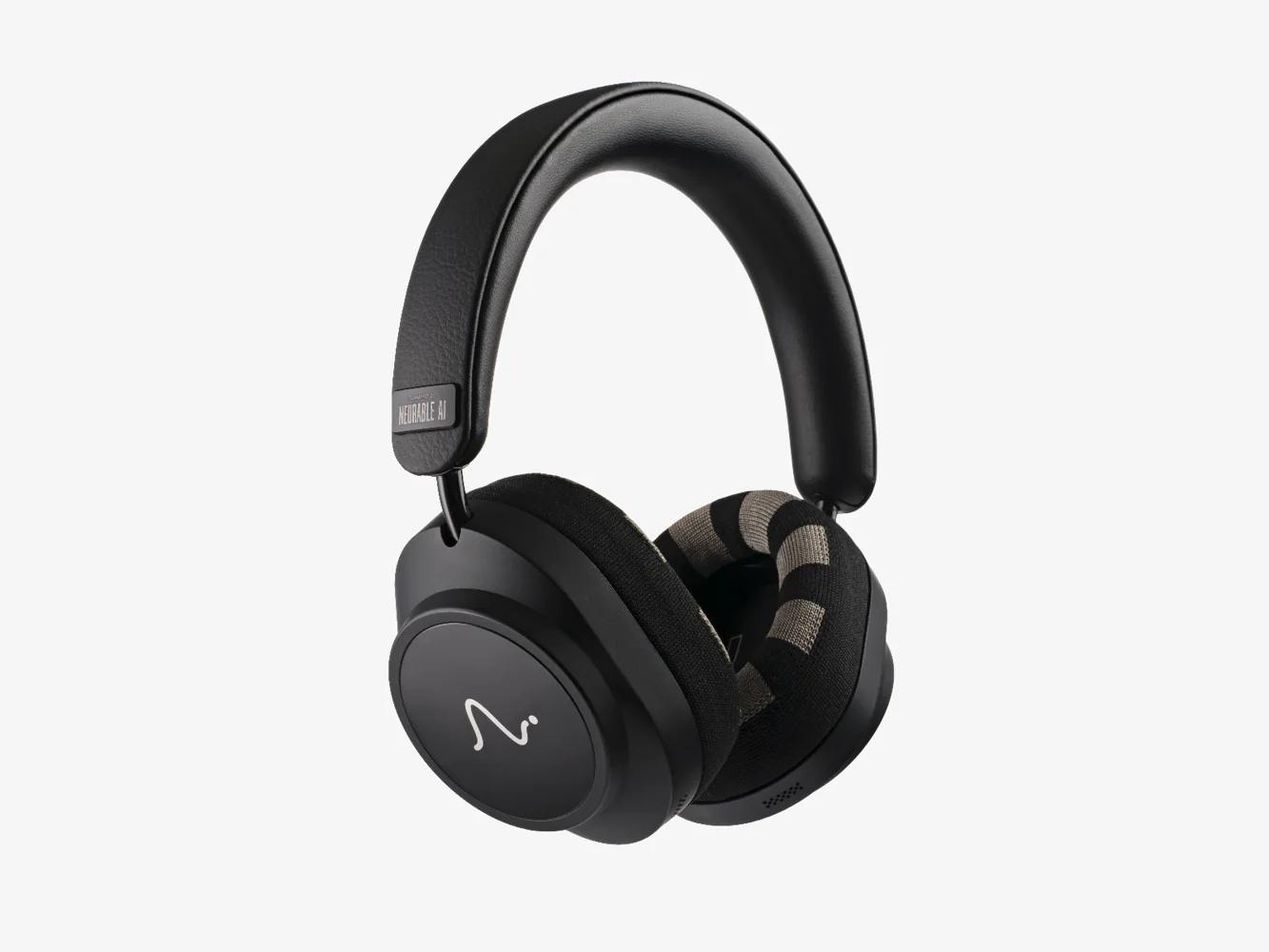
Neurable One is a pair of noise-cancelling headphones with 12 dry EEG sensors woven into the ear pads. It launched on October 1, 2026, at $499, with US preorders shipping in four to eight weeks.
The big change from their latest smart headphones is passive tracking. You don’t have to start a session and it starts reading brain activity as soon as you put it on. Each morning you do a one-minute eyes-closed baseline, and the app tracks eight metrics against your own history: brain age, energy reserve, speed, focus, workload, stress, sleepiness and alpha peak frequency.
For ADHD, the useful part is the feedback loop during work. In Focus Sessions, the audio shifts when your attention drifts, and the app prompts a break when it sees signs of fatigue. That matters for people like me who either drift without noticing or hyperfocus for four hours and then crash. Neurable is clear that it does not read thoughts. It reads patterns linked to attention and effort.
The evidence is thin so far. IEEE Spectrum’s reviewer found the headphones sometimes nudged them when they checked their phone, but suspected they were among the third of users who don’t see better focus. Neurable says the longer-term metrics take about a week to calibrate, so judge it after a month, not a day.
As headphones, the specs are solid: 40 mm beryllium drivers, ANC, aptX, multipoint and up to 22 hours of audio. With EEG running, battery drops to about 12 hours. Nobody has tested the sound against the Sony and Bose flagships at the same price yet.
What I like:
- You wear them anyway, so the data builds without extra effort
- Real-time drift alerts during deep work
- Works as normal ANC headphones with the sensors off
- No subscription announced at launch
What I don’t:
- Brand new, with no independent focus data on this model
- 345 g is heavy for long sessions
- US only for now, with a 14-day return window
- Brain data privacy: read the terms before you buy
Price: $499 one-time.
2. Muse S Athena: the most complete brain-training headband
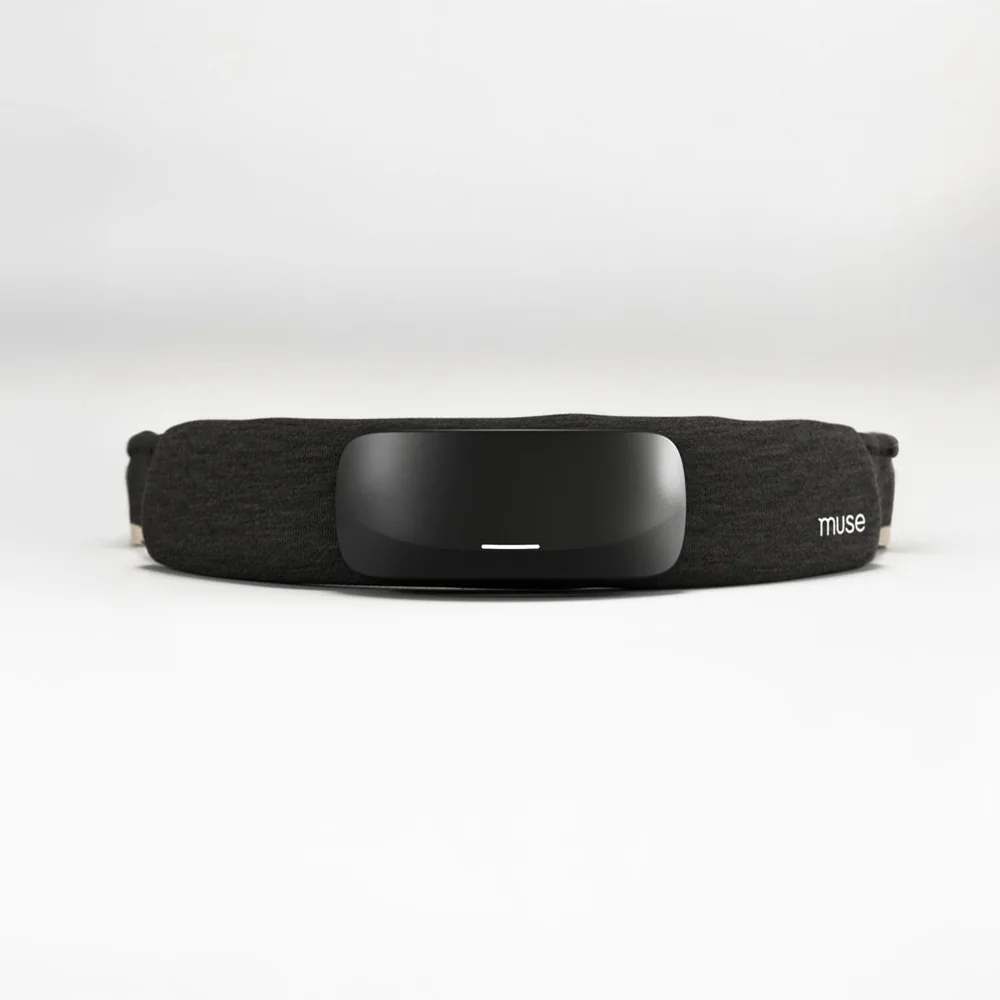
Muse S Athena is a soft fabric headband from InteraXon, the Toronto company behind the Muse line. It is the first consumer wearable to combine EEG with fNIRS. EEG reads electrical brain activity. fNIRS uses light to track blood flow and oxygen in the prefrontal cortex, the part of the brain that runs attention and planning. It also tracks heart rate, breathing and posture.
The ADHD case rests on two training modes. The EEG side gives you live audio feedback during meditation, so you hear when your mind wanders and learn to pull it back. The fNIRS side trains your prefrontal cortex to work harder for a set time, then recover. CNET’s tester described a game where your focus controls how fast an owl flies. For a brain that hates boring tasks, a game is a much easier sell than silent meditation.
The sleep tools are the other half of the value. Because it is a soft band, you can wear it overnight. Sleep Assist reacts as you drift off, Deep Sleep Boost plays quiet sounds timed to your slow waves, and Smart Wakeup (Premium only) wakes you in light sleep. Muse’s own internal data claims users fall asleep up to 55% faster. Poor sleep wrecks ADHD focus the next day, so this matters more than it sounds.
The downsides are cost and friction. Reviewers report Bluetooth connection problems, and if you use it for sleep you will be charging it every day. The best features, including the AI coach and cognitive tracking, sit behind a premium subscription.
What I like:
- EEG and fNIRS training in one device
- Comfortable enough to sleep in
- Gamified training that holds ADHD attention
- 30-day returns and a 1-year warranty
What I don’t:
- Near $500 before you add Premium
- Smart Wakeup and the AI coach are paywalled
- Some users report unreliable connections
- Daily charging if you track sleep
Price: $474.99 for the headband alone. The bundle with one year of Premium is $539, against a regular combined price of $584.98.
3. Mendi: the best value in home neurofeedback
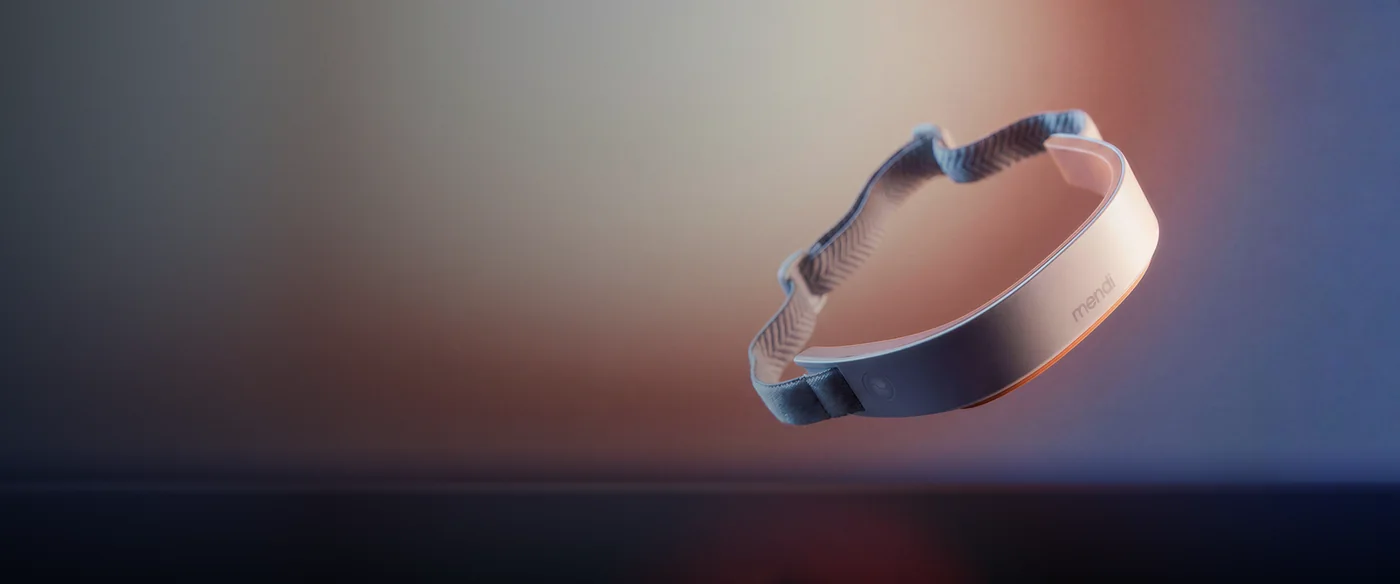
Mendi is a slim headband from Swedish company Mendi Innovations that does one thing: fNIRS neurofeedback for your prefrontal cortex. It costs $299 once, with lifetime app access and no subscription. In a category where most brands charge monthly, that alone puts it near the top of my list.
A session works like a simple game. You sit still and try to keep a ball floating on screen. The ball rises when blood flow and oxygen in your prefrontal cortex go up, which happens when you hold calm, steady attention. You have to find the mental state that moves the ball, and over time you get faster at finding it.
For ADHD this is the most direct form of training on the list. The prefrontal cortex handles focus, impulse control and working memory, the exact skills ADHD makes harder. A 2020 systematic review of 22 fNIRS neurofeedback studies found early signs of benefit in groups including ADHD. The authors also said the studies were too small and varied for firm clinical conclusions.
That gap matters. Mendi itself has not published clinical trials on the device, so you are buying into the method, not proof of this product. From my own time with home neurofeedback, the people who get results are the ones who do short sessions several times a week for a couple of months. Mendi suggests two to three sessions a week, and the habit is the hard part for ADHD brains.
What I like:
- One payment, no subscription, ever
- Sessions take a few minutes
- Light and easy to travel with
- Clear, game-style feedback
What I don’t:
- No published trials on the device itself
- Results depend on weeks of consistent use
- Training only, with no sleep or all-day tracking
- Refund terms differ between Mendi’s pages, so check at checkout
Price: $299 one-time.
4. Pulsetto: the cheapest way into vagus nerve stimulation
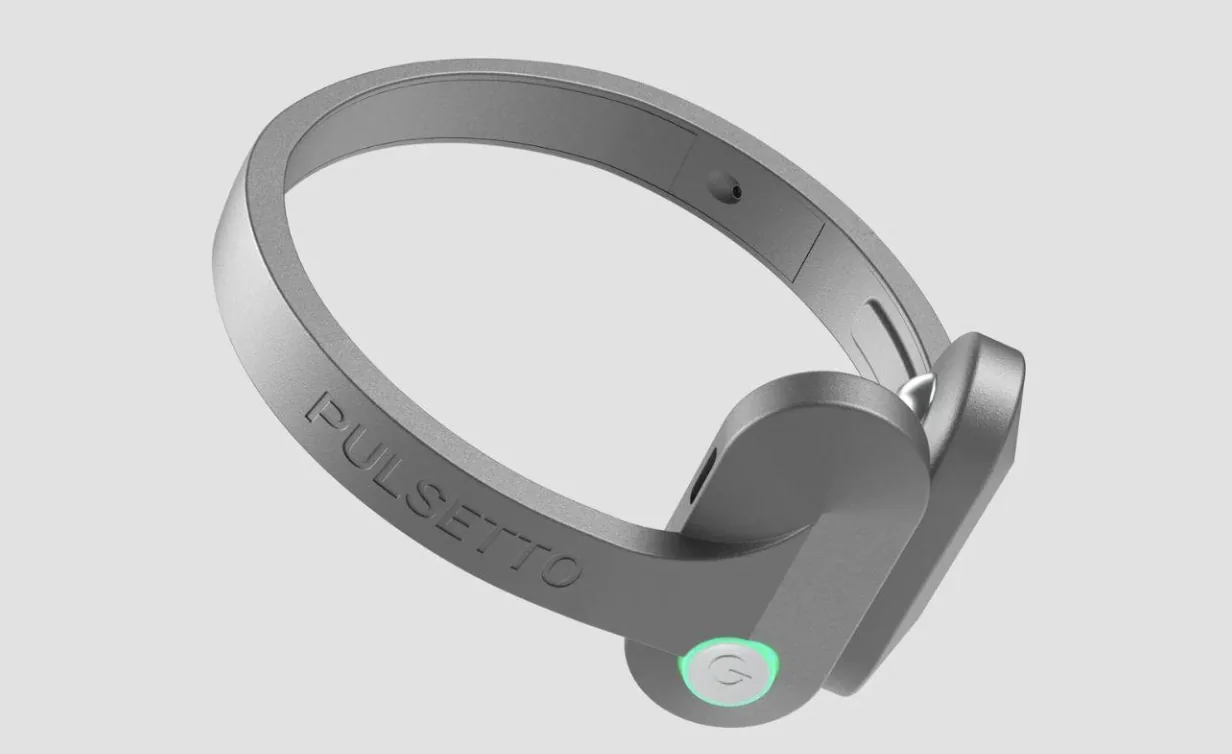
Pulsetto is a neck collar that sends mild electrical pulses through the skin to the vagus nerve, the main nerve of your rest-and-digest system. You put gel on two contact points, clip it around your neck and run a session from the app. Sessions are short, and Pulsetto pitches them as about four minutes a day. There are three models now: Lite, FIT and the new FIT X with contact sensing and offline sessions.
This is not a focus trainer. It is a state shifter. A lot of my worst ADHD days are really stress days: racing thoughts, tight chest, 30 tabs open and nothing finished. Calming the nervous system first often makes focus possible again. That is the logic behind vagus nerve stimulation for ADHD, and it is an indirect route.
The research on neck-based stimulation is early and mostly not on this device. Innerbody tested Pulsetto and saw little difference between the free and Premium programs, which is useful to know before you pay for the app. The device works without a subscription, with five programs included.
The hidden costs are gel and the app. One retailer’s comparison puts Pulsetto Lite’s first-year cost at about $459 once you add a year of Premium and a gel box. Skip Premium and buy gel cheaply, and you are closer to $300.
What I like:
- Lowest entry price among the electrical stimulators here
- Hands-free, so you can sit at your desk during a session
- Works without the paid app
- 2-year warranty and 30-day returns
What I don’t:
- Needs conductive gel every time
- Little device-specific research
- Premium app adds little, per Innerbody’s testing
- Helps stress more than attention itself
Price: Lite $269, FIT $296, often discounted. App Premium is $139 for 12 months, or $45 a quarter after the free trial.
5. Nurosym: the premium ear-clip option with the most research
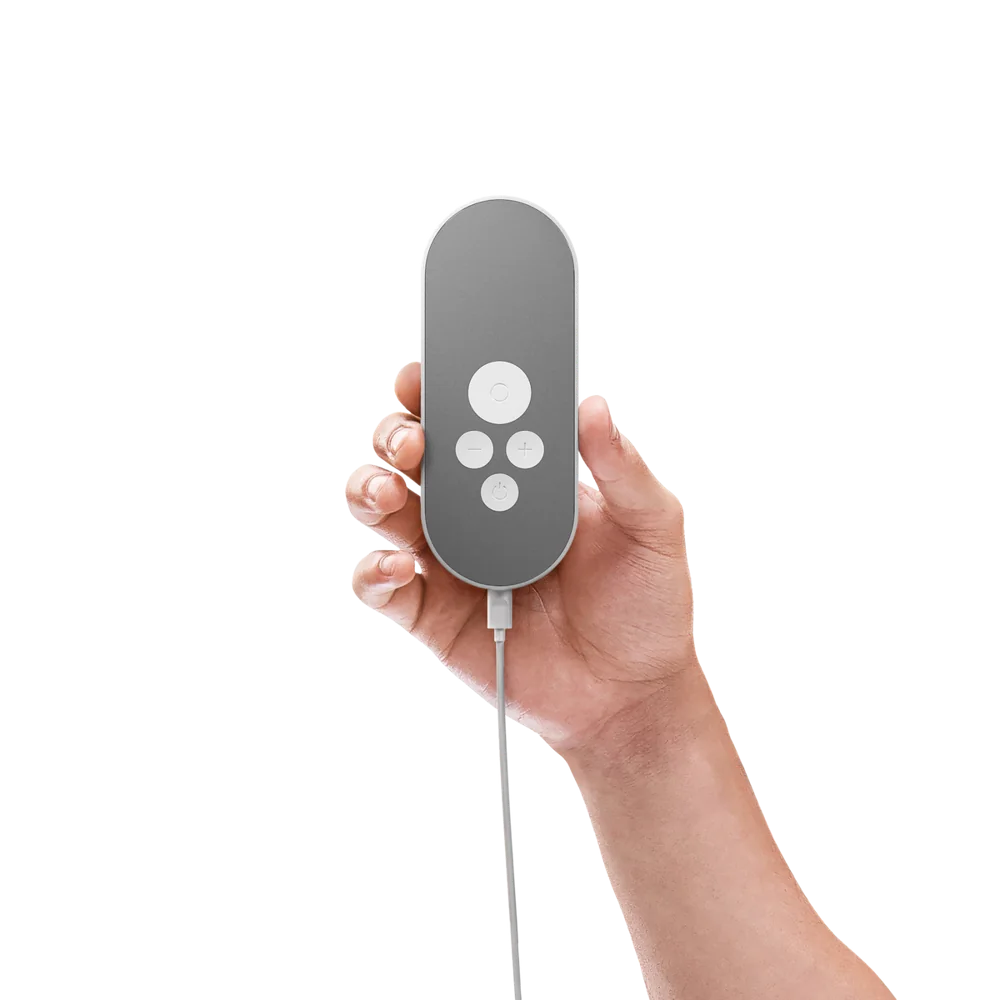
Nurosym is an ear-based vagus nerve stimulator made by a company called Parasym. Instead of the neck, it clips onto the tragus, the small flap at the front of your left ear, where a branch of the vagus nerve sits close to the skin. This method is called taVNS, and it is the most studied form of non-invasive vagus nerve stimulation.
The research base is the main reason to pay more. A 2024 scoping review of 109 taVNS studies covered more than 2,200 adults on active stimulation and found the method safe and well tolerated, with growing evidence of effect. Most of those studies looked at psychiatric, heart and neurological conditions, not ADHD. So the case for focus is the same indirect one as Pulsetto: calm the system and attention has room to work.
The daily experience is simpler than the neck devices. There is no gel and no subscription, and the ear clip is easy to place correctly every time. Sessions run around half an hour, which I see as a plus: you can wear it while you read, plan your day or clear your inbox.
The problem is the price. It lists as $825 to $900 depending on region, and in Europe it sells for about €700. The same review flags that the clinical trials Parasym cites are hard to access. Side effects reported for taVNS include skin irritation, nausea, dizziness and headache.
What I like:
- Most studied form of non-invasive VNS
- No gel, no subscription, no running costs
- Easy to place the same way every time
- You can work while it runs
What I don’t:
- Three times the price of Pulsetto
- Little ADHD-specific research
- Brand’s own trial data is hard to read in full
- Longer sessions need some patience
Price: About $825 to $900 in the US and about €700 in Europe, one-time.
6. Apollo Neuro: vibration you can wear all day
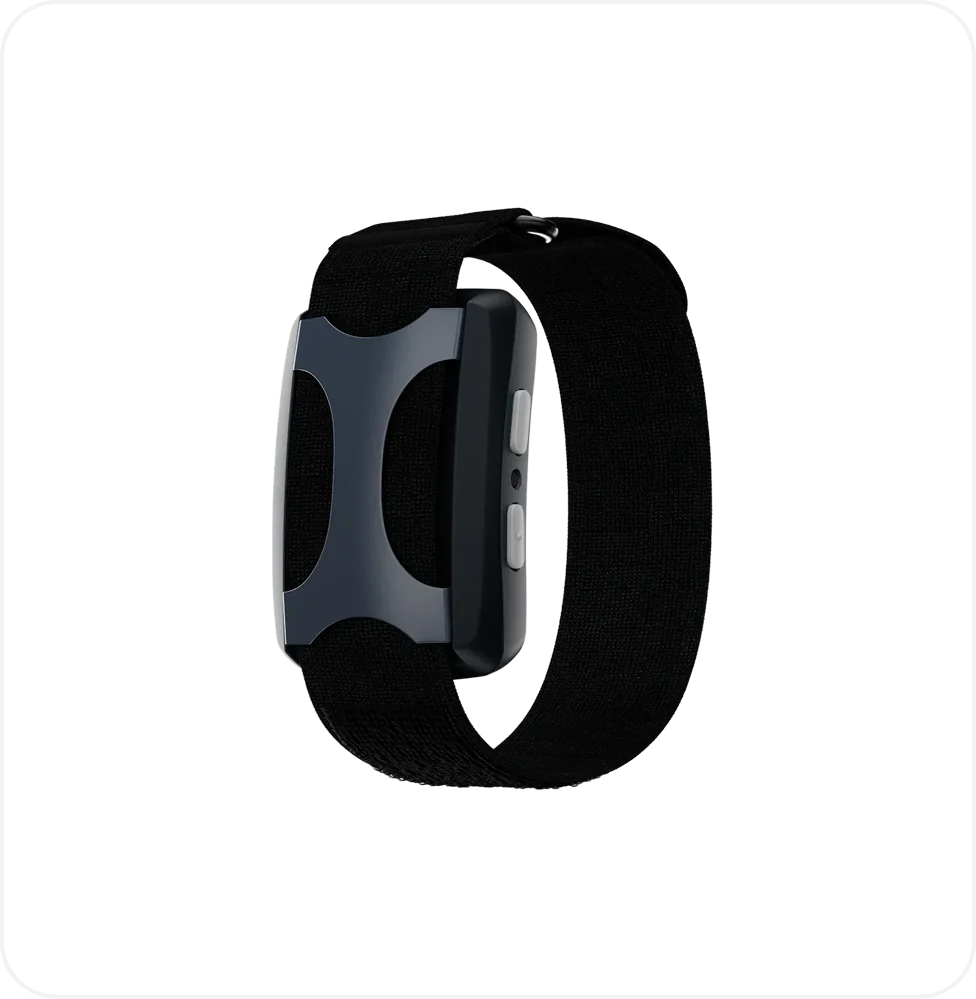
Apollo Neuro is a small wearable that sits on your wrist or ankle, or clips to your clothes, and plays gentle vibration patterns. There are no electrodes and nothing to feel beyond a soft hum. Each pattern is designed to push you toward a state, and one of the modes is called Clear and Focused. Others target calm, sleep and recovery.
For ADHD, the appeal is that you never stop working to use it. You can start a focus pattern and keep typing. That is a big deal when the hardest part of any routine is stopping to do the routine. It also integrates with the Oura Ring for sleep insights.
The evidence is the weak spot. Apollo funds and promotes its own research, and independent reviewers say claims like an extra 60 minutes of sleep should be read with caution. Wareable gave it 4.1 out of 5 and summed it up as a wellness wearable you’ll keep using that won’t fix your sleep on its own. One reviewer also said the hardware feels cheap for the price.
Battery is up to eight hours per charge, which covers a workday but not a full day and night. Check the refund terms before you buy the bundle, since some reviewers report trouble getting money back on the membership.
What I like:
- Works in the background while you keep working
- No electrodes, gel or pads
- Wrist, ankle or clip-on
- Oura integration
What I don’t:
- Mostly company-funded research
- Subscription after the first year
- About eight hours of battery
- Some refund complaints on bundles
Price: $349 for the wearable, $448 with a year of SmartVibes, then $99 a year. An iPhone-only app version without the wearable costs $89.99 a year.
7. Sensate 2: a shutdown ritual for an overloaded brain
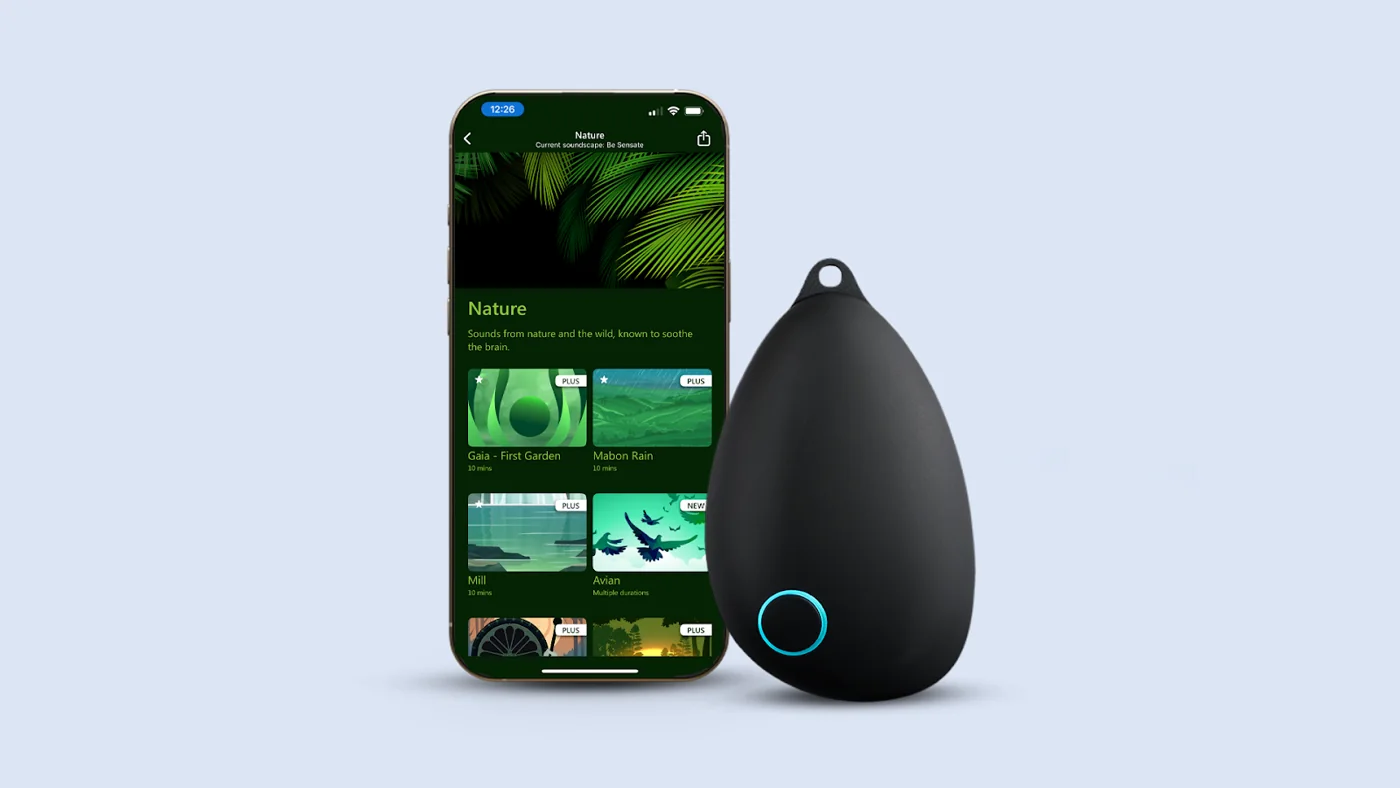
Sensate 2 is a smooth pebble you rest on your sternum while you lie down. It plays low-frequency vibrations, which the company calls infrasound, in sync with soundscapes in your headphones. You feel the vibration through your chest while you listen. Sessions run from 10 to 30 minutes and are picked in the app.
This is the least focus-specific tool on the list, and I include it for a reason. ADHD brains are bad at switching off. After a big day of calls, plenty of us still feel wired at 11pm, which wrecks sleep, which wrecks the next day’s focus. A device that gives you a fixed, physical wind-down ritual can break that loop. Sensate is built for that job.
It is also the gentlest option here. No electrical current, no gel, nothing on your neck. If electrical stimulation makes you nervous, this is an easier first step into nervous-system tools. It can be described as better suited to quick stress relief than to long-term nervous system change, which matches how I would use it.
The limits are clear. You have to lie down with headphones on, so you can’t use it at your desk. The app is required, and some App Store reviewers complain about extra charges for meditation content after paying for the device. There is little published research on this specific technology.
What I like:
- No current, gel or pads
- A simple, repeatable wind-down routine
- Mid-range price
- Works well before sleep
What I don’t:
- Not usable while you work
- Needs the app and headphones every time
- Some content costs extra
- Thin research base
Price: $249 at launch, now listed from about $269. In Europe it starts at €299.
8. Revibe: a smartwatch built for ADHD task focus
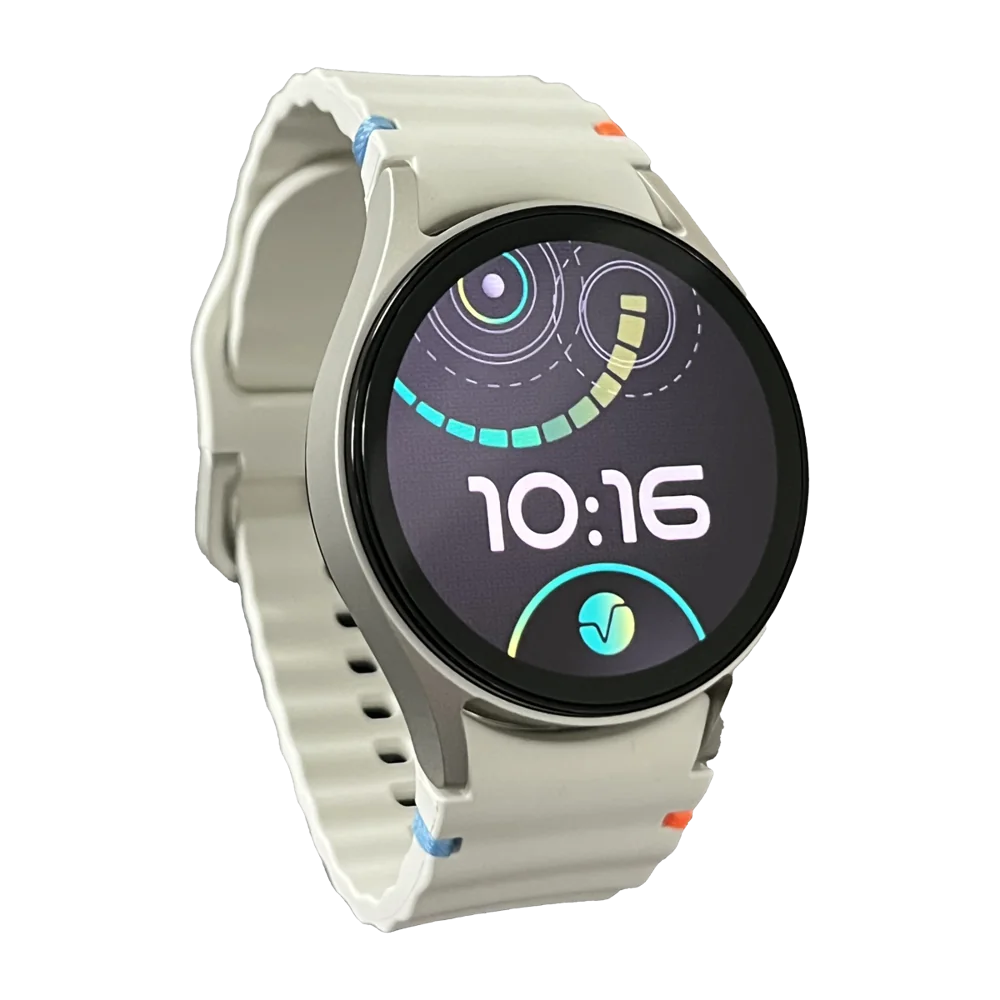
Revibe is the only tool here designed for ADHD from day one. School psychologist Rich Brancaccio built the first version, and Pearson bought the technology in 2024. In October 2025, Pearson relaunched it on a Samsung Galaxy Watch7 for both kids and adults.
The idea is simple. The watch buzzes at intervals and asks a version of “Am I doing what I’m supposed to be doing?” You answer honestly with a tap. It also sends custom text reminders and tracks on-task time, fidgeting, work completion and exercise. Pearson says the AI learns your patterns and adjusts the timing.
For ADHD, this targets the moment I care about most: the drift you don’t notice. Most of my lost hours start with one “quick” check of something. A gentle tap on the wrist that asks you to check in builds self-awareness over time. Pearson’s adult version is pitched at staying on the right task, not just staying busy.
There is published research, though it is early. Pearson cites a 2023 open-label study on ADHD, executive function and academic performance. Open-label means there was no placebo group, and the research was co-authored by Revibe’s founder. Most of that work focused on children.
What I like:
- Built for ADHD by a school psychologist
- Simple check-in prompts that train self-awareness
- Tracks on-task time so you can see patterns
- Works for adults and kids
What I don’t:
- Subscription only: the watch stops working without it
- The watch runs Revibe only, so it doesn’t replace your smartwatch
- $449 a year adds up fast
- Research is early and mostly in children
Price: $449 per year, which includes the watch and the web app.
9. Brain.fm: the cheapest focus tool that works on day one
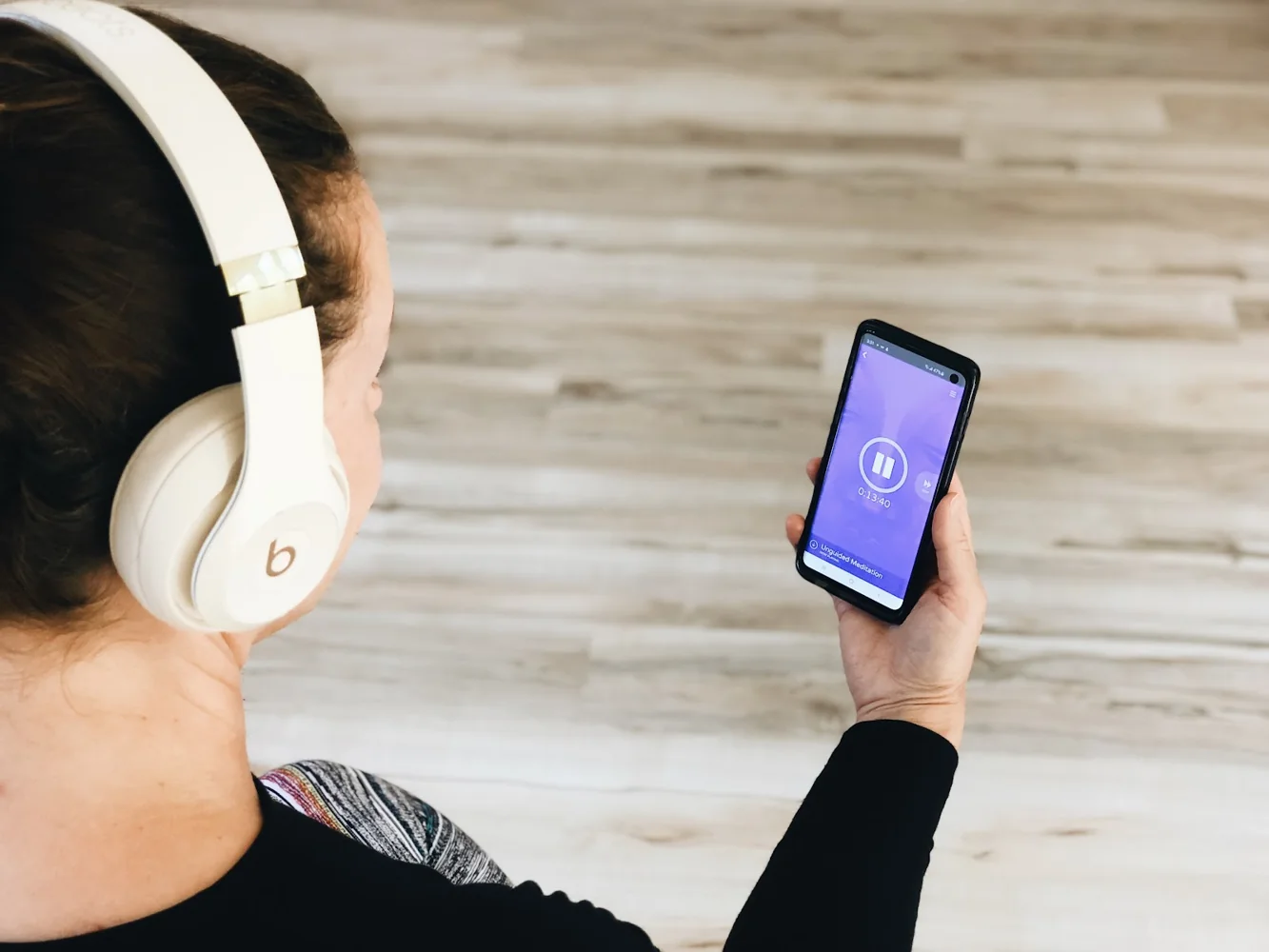
Brain.fm is an app, not a gadget, and it is the tool on this list I would tell most people to try first. It plays AI-generated instrumental music with a steady pulse built into the sound. The company calls the method neural phase locking: the rhythm is meant to nudge your brain’s attention networks into sync with it.
There is a dedicated ADHD mode. Turning it on switches you to the highest neural effect level, the strongest setting. You pick an activity, such as deep work or creative work, set a timer and press play. There is also a built-in Pomodoro mode, which is a nice fit if you already work in sprints.
Why it works for ADHD is less about neuroscience and more about friction. The hardest part of my day is starting. Brain.fm takes about five seconds to start and gives your brain a cue that work time has begun. Pair it with a timer and a website blocker and you have a cheap, effective start-of-work ritual.
Brain.fm has peer-reviewed fMRI and EEG research behind its approach, more than most focus apps can claim. Be careful with the billing, though. Some users report surprise renewals, and while support often issues refunds, it pays to set a reminder before your trial ends.
What I like:
- Cheapest tool here by a wide margin
- ADHD mode and Pomodoro timer built in
- Works on phone, desktop and offline
- Instant: no setup, charging or gel
What I don’t:
- Needs headphones to work best
- Tracks can feel repetitive after months
- Some billing complaints around renewals
- Brand claims about the ADHD mode haven’t been independently verified
Price: $9.99 a month or $69.99 a year, as observed in early 2026, with a 7-day free trial. Some listings show $99.99 a year, so check the price at checkout.
10. EndeavorOTC: an FDA-authorized video game for adult ADHD
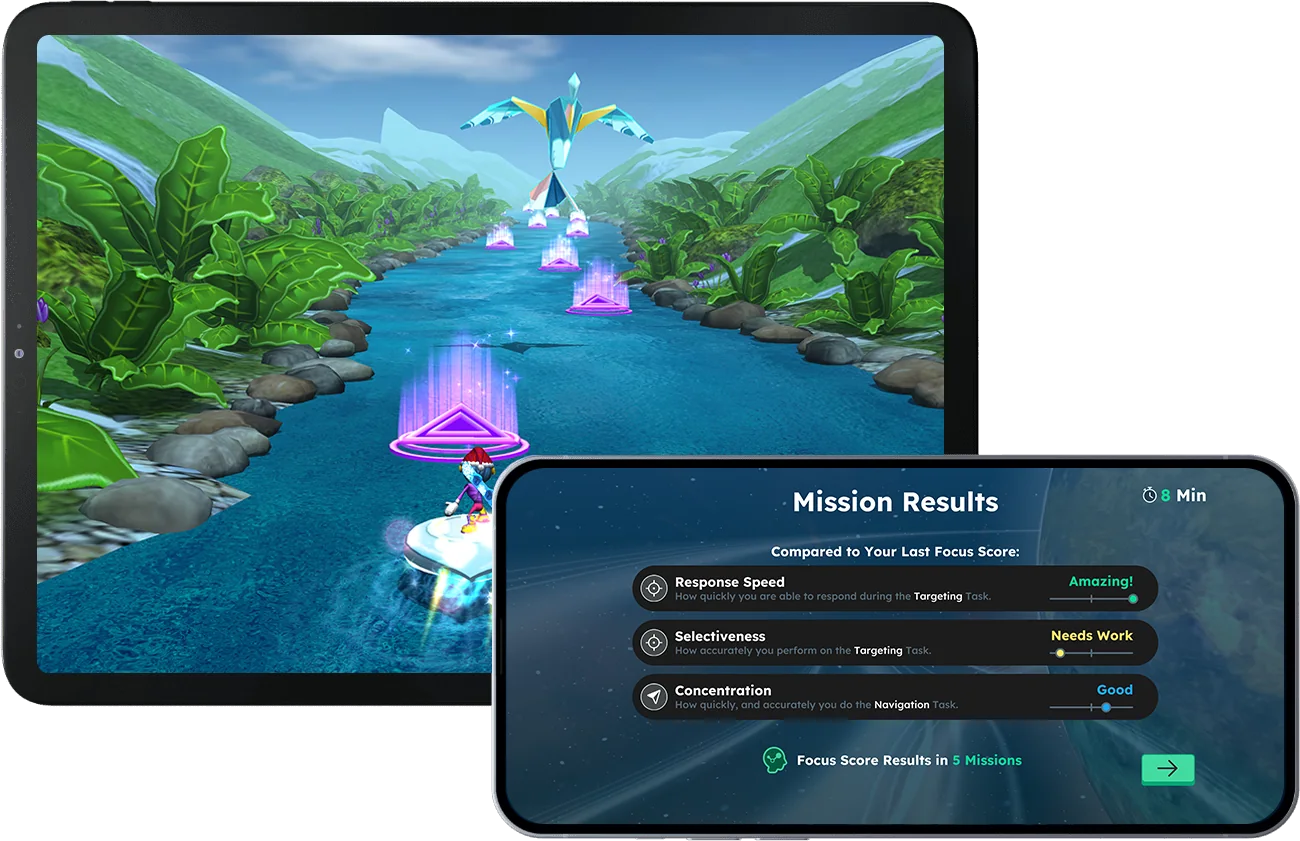
EndeavorOTC is a phone game from Akili, the company behind EndeavorRx for kids. It is the first FDA-authorized over-the-counter digital treatment for adult ADHD, so you don’t need a prescription. You download it on iOS or Android and start.
The game has you tap targets and steer around obstacles at the same time. The difficulty adapts to keep you at the edge of what you can handle, which is the training effect. It also gives you a Focus Score so you can track attention over time.
For ADHD adults, the appeal is simple: it’s a treatment that feels like a game, which is much easier to stick with than a worksheet. In the STARS-ADHD-Adult study of 221 adults over six weeks, 45.8% met a clinical threshold for meaningful improvement and 72% reported better quality of life. That study was not blinded, so treat those numbers as a best case.
The common complaints are price and boredom. App reviewers mention the cost, no meaningful free trial and repetitive gameplay. Akili offers a money-back promise if you play for six weeks, 70+ minutes a week, and don’t see better attention.
What I like:
- FDA-authorized, no prescription needed
- Short daily sessions on your phone
- Focus Score to track progress
- Money-back promise if it doesn’t help
What I don’t:
- No free trial
- Gameplay gets repetitive
- Main adult study was unblinded
- Subscription adds up if you keep playing
Price: $69.99 for 3 months, $99.99 for 6 months or $129.99 a year.
11. Loop earplugs: turn down the noise without going silent
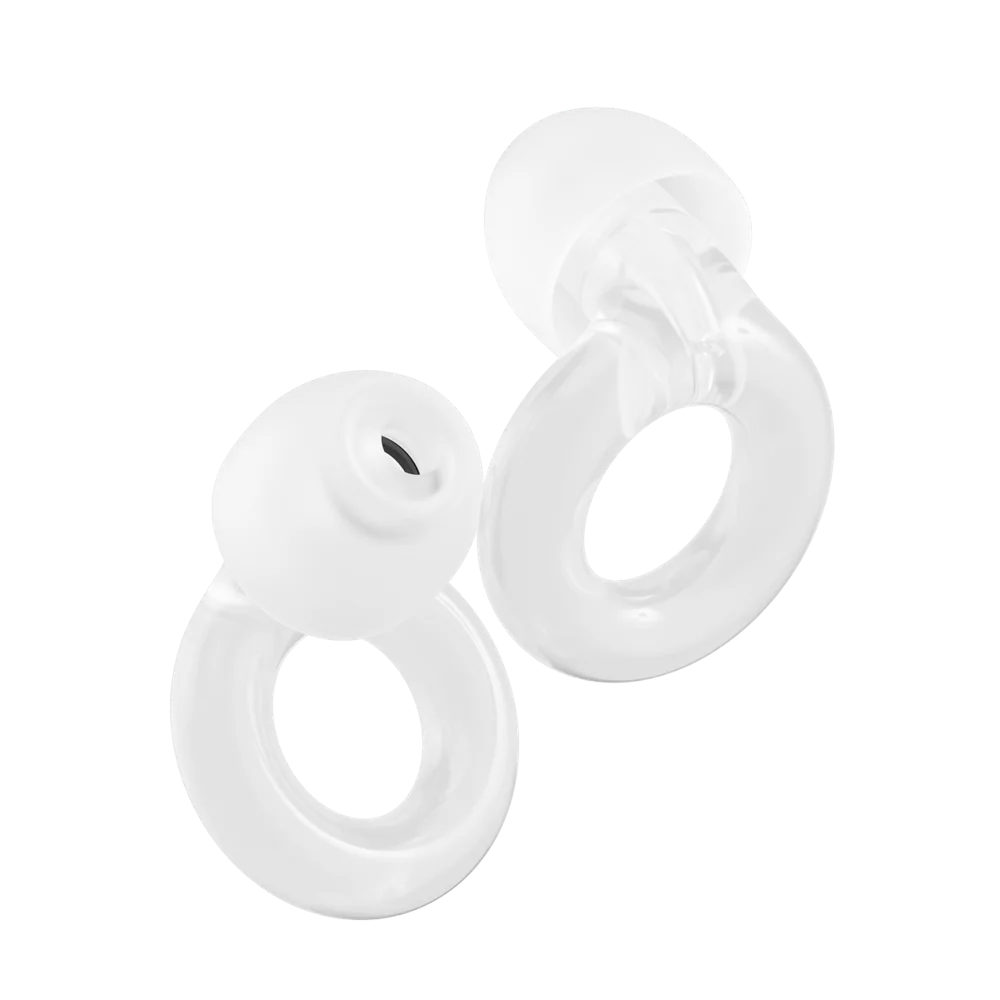
Loop makes reusable earplugs that lower sound instead of blocking it. They are a low-tech pick, but noise is one of the fastest ways to lose an ADHD brain. A coffee machine, a conversation two desks over or traffic outside can pull you off task every few minutes.
Different models do different jobs. Engage 2 cuts about 16 decibels while keeping speech clear, so you can still hold a conversation. Quiet 2 is the deep focus and sleep option, and Switch 2 lets you change between three levels on the fly. For working in a café or a coworking space, I’d start with Engage 2 and add Quiet 2 for deep work.
Many ADHD users report that softer background noise helps. A Fit&Well writer with ADHD said the plugs helped them filter noise and beat distractions. There is no ADHD-specific research on Loop itself, so treat this as a sensory tool, not a treatment.
They are cheap enough to test without much risk, and Loop offers 100-day returns. Fit varies, so try the different ear tip sizes before you give up on them.
What I like:
- One of the cheapest tools on the list
- You still hear voices and alarms
- Pocket-sized and silent
- 100-day returns
What I don’t:
- No research on ADHD specifically
- Fit takes trial and error
- Some users find them uncomfortable after hours
- Easy to lose
Price: Quiet 2 $34.95, Engage 2 $49.95, Switch 2 $79.95.
12. Time Timer MOD: make time visible
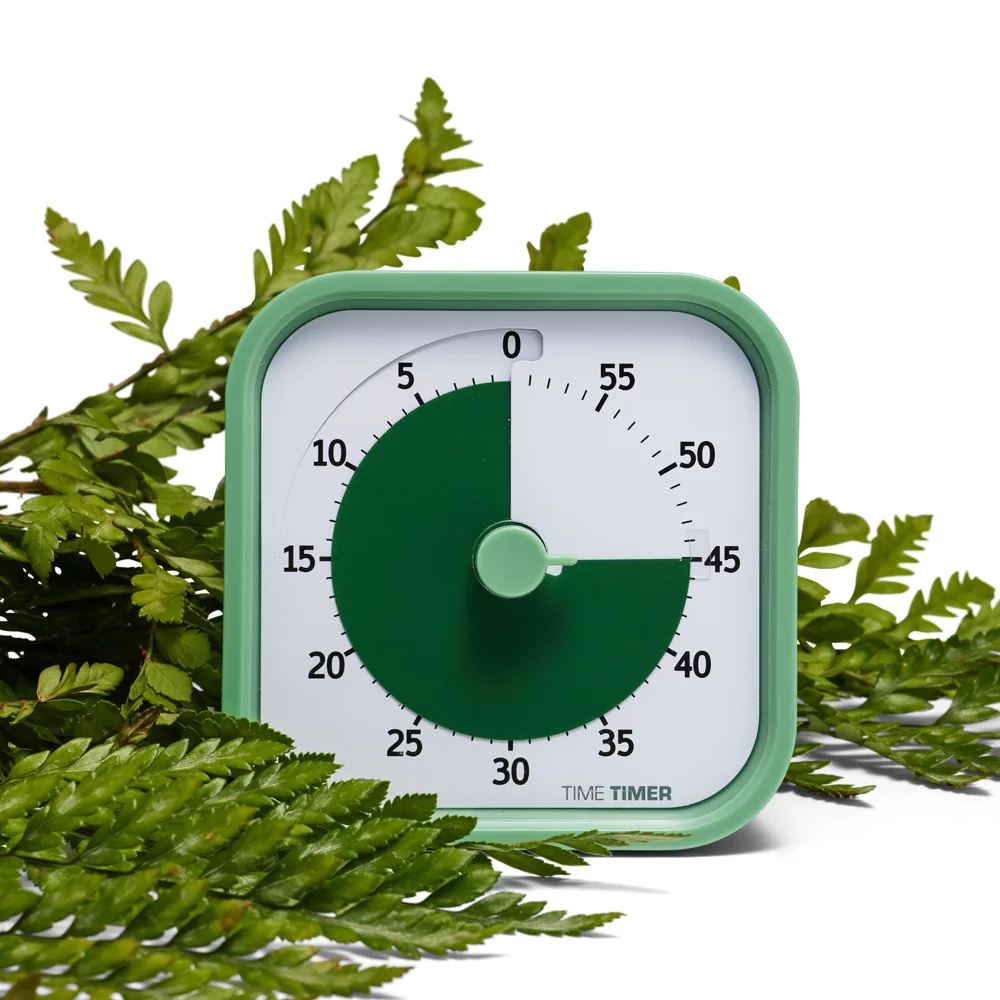
Time Timer MOD is a small 60-minute timer with a coloured disk that shrinks as time passes. No app, no Bluetooth, no ticking. You twist the dial, and you can see at a glance how much of your block is left.
It targets time blindness, one of the most frustrating parts of ADHD. A digital clock tells you it’s 2:40. A red wedge getting smaller tells you that you have about a third of your hour left and you’re still on email. That visual cue lands faster than numbers do.
I like it as a sprint tool. Set 25 or 50 minutes, put it where you can see it, and work until the red is gone. Because it’s a physical object, you don’t have to unlock your phone to check the time, which is often where the next distraction starts.
There is a 120-minute model for longer blocks and shorter ones for quick tasks. The Home Edition costs $24.95 on Time Timer’s site, and it runs silently with an optional alert.
What I like:
- Cheapest gadget on the list
- Keeps you off your phone
- Shows time passing at a glance
- Silent, with an optional alert
What I don’t:
- Does one thing only
- No tracking or data
- 60-minute max on the standard model
- Easy to ignore once it becomes furniture
Price: $24.95 for the Home Edition, one-time.
13. Tiimo: a visual planner built for ADHD brains
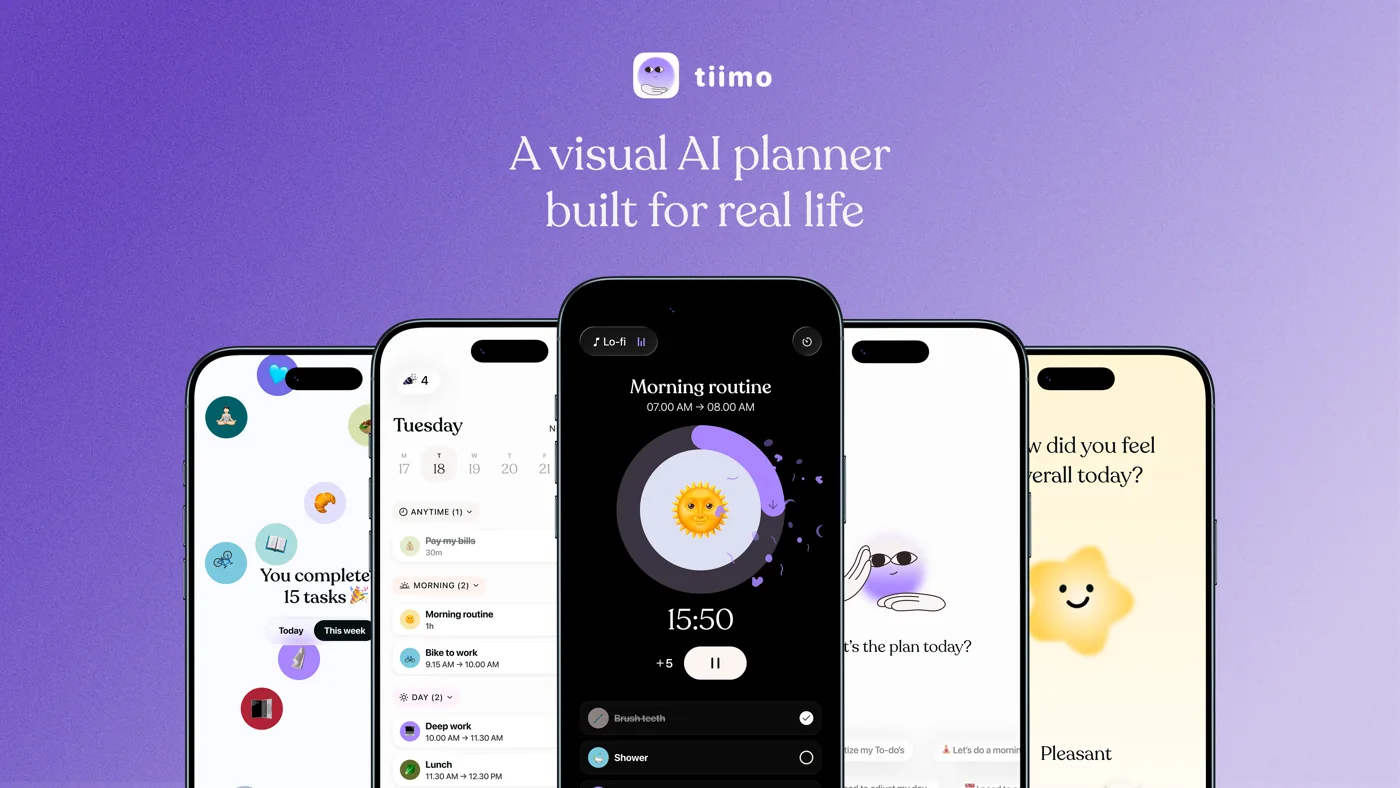
Tiimo is a daily planner app from a Copenhagen team, designed with ADHD and autism in mind. Instead of a wall of text, your day shows up as a colourful timeline with icons and built-in focus timers. Apple named it iPhone App of the Year at the 2025 App Store Awards.
The ADHD case is the same as the Time Timer, applied to your whole day. You see what’s next and how long you have before the next transition. That helps with the classic ADHD problem of losing an afternoon to one task and then panicking at 5pm.
The newer feature that matters most for ADHD is the AI Co-Planner. It breaks big tasks into smaller steps, which is where a lot of us get stuck. “Launch the workshop” is paralysing. “Write three bullet points for the landing page” is doable.
The downsides are design taste and price clarity. The icon-heavy look reads as childish to some people who want a denser planner. Tiimo also doesn’t publish one fixed price, and the free plan runs on phones only, not the web.
What I like:
- Built specifically for ADHD and autism
- Visual timeline fights time blindness
- AI Co-Planner breaks tasks down
- Free plan to start
What I don’t:
- Design can feel childish
- Web planner and AI need Pro
- Pricing varies by region and store
- Another app that lives on your distracting phone
Price: Free plan available. Pro is about $12 a month or $79.99 a year in the US.
14. Focusmate: body doubling on demand
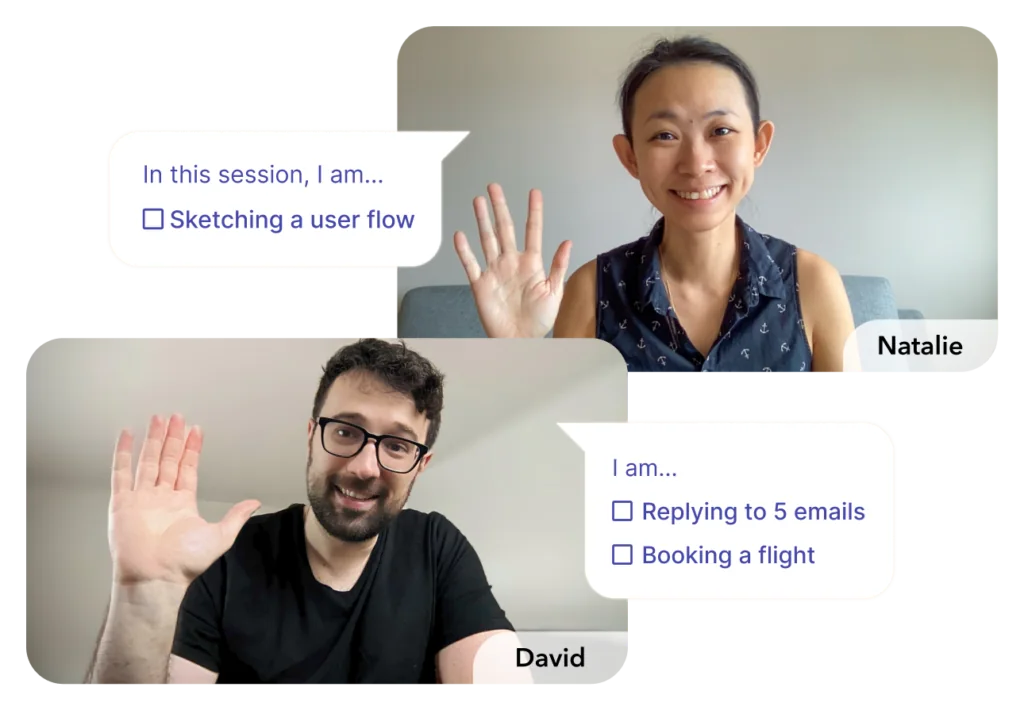
Focusmate pairs you with a stranger on a video call for a fixed work session. At the start, you each say what you’re going to do. Then you work in silence with your cameras on, and at the end you report whether you finished. That’s the whole product.
It is a digital version of body doubling, one of the most common ADHD tricks: having another person present makes it easier to start and keep going. If you work alone, as a lot of solo founders do, there is no one around to notice you drifting to YouTube. Focusmate puts someone there, and saying your goal out loud to another person adds just enough accountability.
It costs the least of anything here that actually changes behaviour on day one. The free tier gives you three sessions a week with no card required, which is enough to test it. Focusmate added topical rooms, including ADHD, in 2025.
It’s not for everyone. Some people find video with strangers awkward, and a minority of users report moderation friction. You also have to book sessions, which only works if you use your calendar.
What I like:
- Fixes the hardest part, starting
- Free tier is enough to test
- ADHD-specific session rooms
- Works from anywhere with a webcam
What I don’t:
- Camera on with strangers isn’t for everyone
- Need to schedule ahead
- Occasional moderation complaints
- No help once the session ends
Price: Free for three sessions a week. Plus is $8 a month billed yearly or $12 month to month.
15. Freedom: block the distractions on every device at once
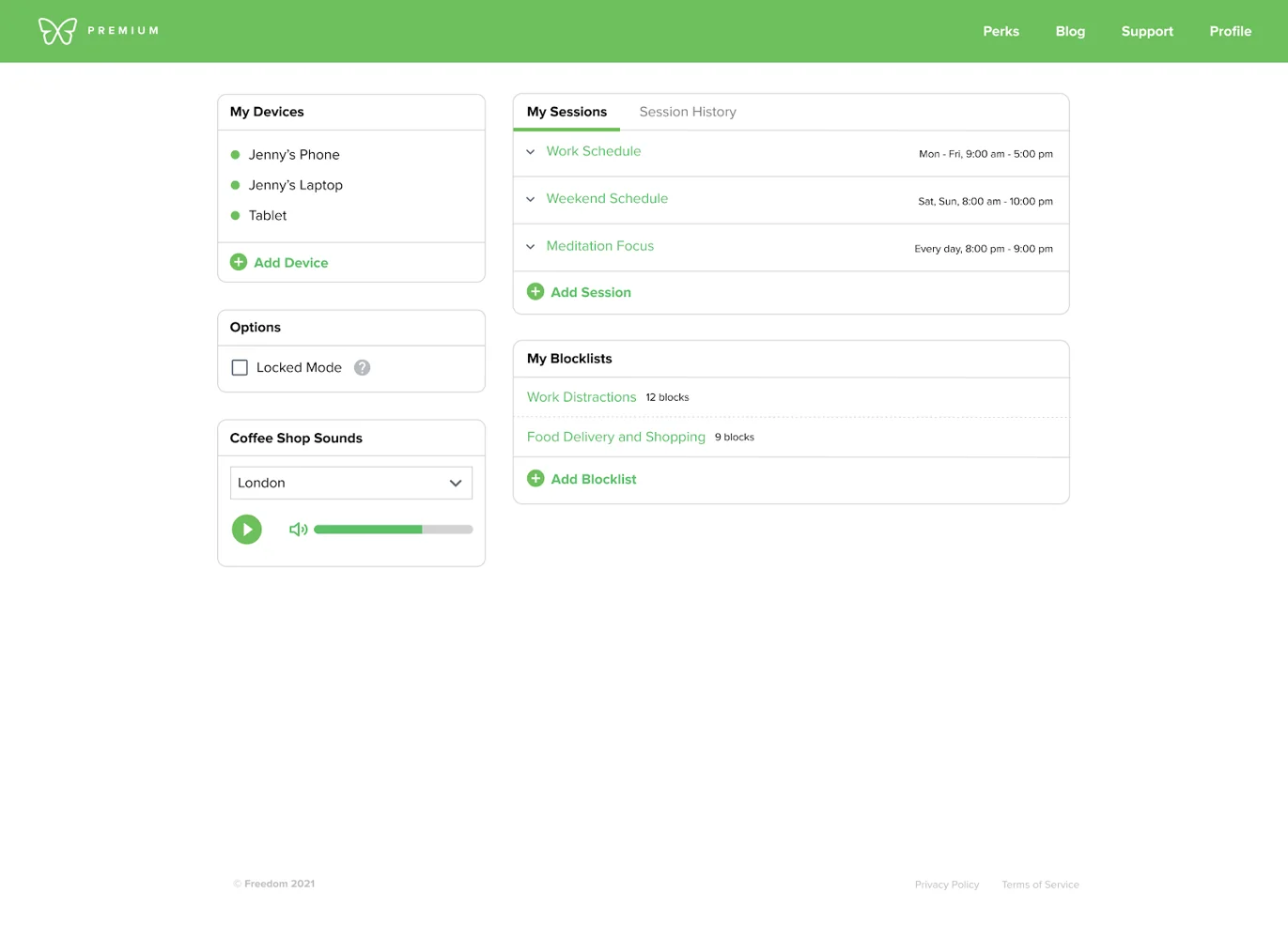
Freedom is a website and app blocker that has been around since 2009. Its main strength is that it blocks across Mac, Windows, iOS, Android and Chrome at the same time. Close YouTube on your laptop and it’s blocked on your phone too.
For ADHD, that matters more than any single blocker setting. The ADHD brain doesn’t give up on a distraction. It reroutes. If Instagram is blocked on your laptop, you reach for your phone without thinking. Freedom closes that loophole, and Locked Mode stops you from turning a session off halfway through.
The feature I’d set up first is scheduling. Block social media and news every weekday morning during your best focus hours, so you don’t have to decide each day. Decisions are where ADHD willpower leaks. Freedom also has a published trial using the app in a real-world setting, which few blockers can say.
The main complaints are about reliability on iPhone. Some third-party reviews describe blocks not working or the Chrome extension disconnecting. If you live on iOS, test it during the trial.
What I like:
- Blocks across every device at once
- Scheduled sessions and Locked Mode
- Affordable yearly plan
- Lifetime option, often on sale
What I don’t:
- Free tier is limited to 2-hour sessions
- Some reports of unreliable iOS blocking
- Chrome extension can disconnect
- Only as strong as your blocklist
Price: Free tier available. Premium is $8.99 a month or $39.99 a year.
How I’d build a focus stack on different budgets
Don’t buy three devices at once. ADHD brains love a new toy, and a pile of half-used gadgets is the most common outcome. Add one tool, use it for a month, and only then add the next.
| Budget | What I’d buy | First-year cost (approx.) | Why |
|---|---|---|---|
| Under $100 | Brain.fm | $70 to $100 | Fixes the hardest part, starting work |
| Around $400 | Mendi + Brain.fm | About $370 to $400 | Adds real focus training with no subscription |
| Around $650 | Mendi + Pulsetto Lite + Brain.fm | About $640 to $670 | Training plus a fast stress reset for bad days |
| All in | Muse S Athena or Neurable One + Nurosym + Brain.fm | About $1,370 to $1,500 | Daily brain data, sleep tools and the most-studied VNS method |
If stress and overwhelm are your main problem, swap Mendi for Pulsetto in the middle tiers. If you lose whole afternoons to drift, Revibe or Neurable One will tell you more than any of the others.
You can also start for under $30. A Time Timer MOD ($24.95), Focusmate’s free tier and Freedom’s free plan cover time blindness, starting and distraction. If you have a diagnosis and want something with FDA authorization behind it, EndeavorOTC at $129.99 a year is the cheapest cleared option for adults.

For the past decade, I've been coaching ADHD entrepreneurs to build businesses that work with their brains and create more freedom in their lives.
I also run an AI search marketing agency for leading health and travel brands. My latest venture, Sacred Treks, offers sacred mountain pilgrimages in some of the world's best ecotourism destinations.
- 15 ADHD Wearables, Gadgets And Tech Tools For Focus - October 25, 2026
- Why I Became a Digital Nomad As A Founder With ADHD - September 16, 2026
- How to Build a Business You Can Run From Anywhere With ADHD - September 15, 2026